
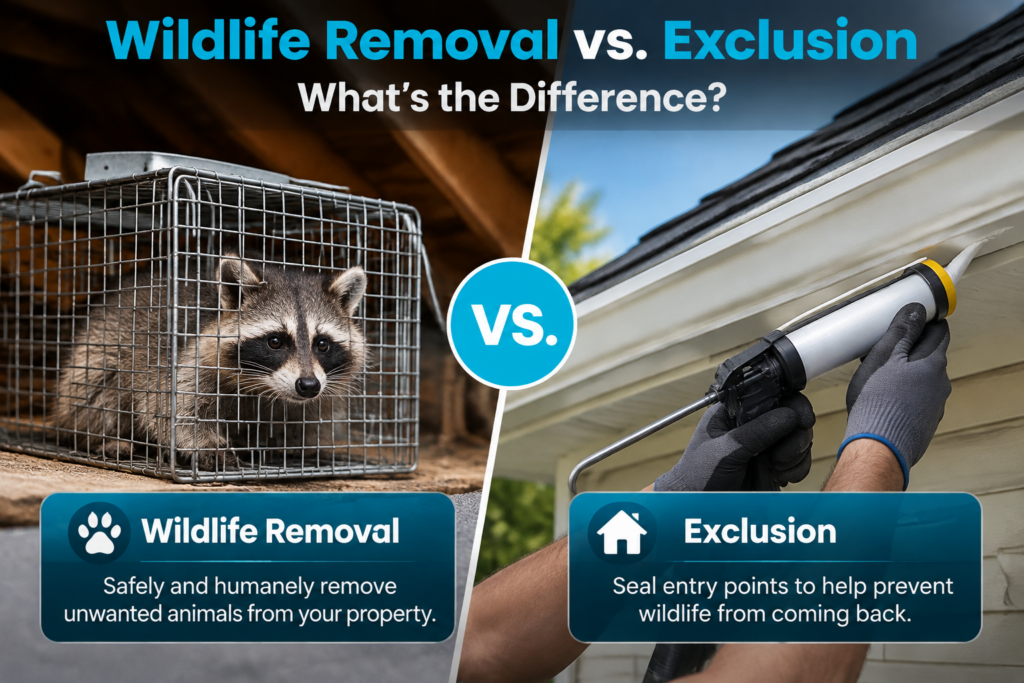
Finding an animal in your attic naturally leads to one question: How do we get it out?
But removing the animal is only part of solving the problem.
If the opening that allowed wildlife into the home remains accessible, another animal may eventually use the same entry point. That’s why professional wildlife management typically involves two separate but equally important steps: removal and exclusion.
Understanding the difference can help homeowners make better decisions about protecting their homes long-term.
What Is Wildlife Removal?
Wildlife removal focuses on safely getting the animal out of the structure.
The appropriate method depends on the species, where the animal is located, whether dependent young are present, and applicable Florida wildlife regulations.
Depending on the situation, professional removal may involve:
• Species-appropriate traps or cages
• One-way exclusion devices
• Non-invasive removal techniques
• Monitoring wildlife activity
• Confirming that dependent young are not trapped inside
There is no single removal method that’s appropriate for every animal or every home. Methods may change depending on the species, location, time of year, presence of dependent young, property conditions, and other circumstances.
What Is Wildlife Exclusion?
Exclusion is the process of identifying and properly closing the openings wildlife can use to enter a structure.
During a professional inspection, the goal isn’t simply to find the opening being used today. The home should also be evaluated for potential entry points that could become tomorrow’s problem.
Common vulnerable areas include:
• Soffits
• Fascia
• Roof returns
• Roof vents
• Plumbing penetrations
• Utility openings
• Damaged screens
• Lifted roofing
• Garage doors
• Construction gaps
Repairs vary depending on the construction of the home and the species involved.
Why Isn’t Removing the Animal Enough?
Imagine removing a roof rat from an attic but leaving the opening it used to enter the home unchanged.
The immediate animal may be gone, but the house is still accessible.
Another roof rat—or another species entirely—may eventually discover the same opening.
That’s why trapping alone doesn’t necessarily provide a long-term solution.
Removal addresses the animal currently inside. Exclusion addresses how wildlife got inside in the first place.
Wildlife may also leave behind odors, scent markings, urine, droppings, nesting materials, and other evidence of previous activity. Depending on the species and conditions, these residual odors or scent cues may remain after the animal is gone.
Why Does the Order Matter?
Wildlife exclusion must be performed carefully.
Sealing a home too early can trap animals—or dependent young—inside the structure. A thorough inspection helps determine what species is present, where it is entering, and the appropriate sequence for removal and repairs.
A complete professional plan may include:
- Interior and exterior inspection
- Species identification
- Identification of active and potential entry points
- Appropriate wildlife removal
- Confirmation that dependent young are not trapped inside
- Permanent exclusion repairs
- Evaluation of contamination, odors, and insulation damage
- Sanitation, antimicrobial treatment, odor-control measures, or insulation removal and replacement when appropriate
- Rodent or pest-control services when appropriate
- Follow-up and prevention recommendations
The exact process varies depending on the animal, condition of the home, extent of contamination or damage, and any additional pest activity identified during the inspection.
Not every property requires every service.
What About Bats?
Bat exclusion requires special consideration in Florida.
Bats often use small openings around soffits, eaves, rooflines, and other construction gaps as roosting locations. In many cases, bats remain within these areas rather than occupying the center of an attic.
Suspected bat activity should be properly identified before openings are sealed or exclusion devices are installed.
In Florida, bat maternity season runs from April 16 through August 14. During this period, it is illegal to exclude or block bats from their roosts without the appropriate permit because flightless young may be trapped inside.
Bat exclusion devices that allow bats to leave but prevent them from returning are the legal and appropriate method of removal.
Does Exclusion Mean Every Opening on My House Gets Sealed?
Not necessarily.
Homes require ventilation, drainage, and other functional openings. Professional exclusion isn’t about indiscriminately sealing every gap.
The goal is to identify openings wildlife can exploit and repair or protect those areas using methods appropriate for the home’s construction.
This is why a thorough inspection is important before exclusion work begins.
Can Wildlife Find Another Way In?
It can.
Wildlife is persistent, and homes change over time. Roofing materials age, soffits become damaged, trees grow, and Florida storms can create new vulnerabilities.
A well-executed exclusion helps address existing vulnerabilities, but homeowners should continue maintaining the exterior of the home and periodically check for new damage.
What Happens After Removal and Exclusion?
Once wildlife has been removed and entry points have been addressed, the attic should be evaluated for any damage left behind.
Depending on the situation, this may include:
• Droppings or urine contamination
• Nesting materials
• Damaged or compressed insulation
• Chewed wiring
• Damaged ductwork
• Soffit or fascia repairs
• Odors
Not every attic requires restoration or insulation replacement. Recommendations should be based on the actual condition of the home.
Frequently Asked Questions
Can I just trap the animal myself?
Removing an individual animal doesn’t identify why it entered the home or prevent another animal from using the same opening. Different species also require different removal methods, and Florida regulations may apply.
Should I seal the hole as soon as I find it?
Not necessarily. Sealing an active entry point before confirming that all animals and dependent young are safely out can trap wildlife inside the structure.
The situation should be properly evaluated before active openings are permanently closed.
Is exclusion permanent?
Professional exclusion is intended to provide long-term protection at the areas repaired, but no home remains unchanged forever.
Weather, aging materials, construction work, tree growth, and storm damage can create new vulnerabilities over time.
Is exclusion the same as pest control?
No.
Wildlife exclusion physically addresses structural openings that allow animals into the home. Pest-control treatments are designed to manage insects and other pests.
Florida Wildlife & Pest Management provides both services, but they solve different problems.
Do I need attic restoration after wildlife removal?
Not always.
Some wildlife problems are discovered early enough that little or no contamination has occurred. Other attics may require sanitation, insulation repair, or more extensive restoration.
A professional inspection should determine what the home actually needs.
Documenting the Condition After Wildlife Removal
Good wildlife management doesn’t end when the animal is gone.
After removal and exclusion, the affected areas should be evaluated and documented so the property owner understands what was found, what was repaired, and whether any additional sanitation or restoration is recommended.
Florida Wildlife & Pest Management documents attic conditions with video whenever possible, including signs of wildlife activity, entry points, completed exclusion repairs, insulation conditions, and other relevant findings.
James’s Pro Tip
“Getting the animal out is only part of the job. We want to know how it got there. We inspect the home for the entry point it’s using now and other areas that could become entry points later. That’s what helps prevent the homeowner from having the same problem again.”