
When an Atlantic tropical system sweeps across the Space Coast, residents inspect properties for downed cabbage palm fronds, snapped branches, and torn shingles.
Additionally, across Brevard County communities from Melbourne Beach to West Melbourne, tropical storms cause ecological displacement that is often overlooked.
Moreover, rising water along the Indian River Lagoon and saturated soils strip wild mammals of burrows and hollow trees, forcing them to seek dry shelters.
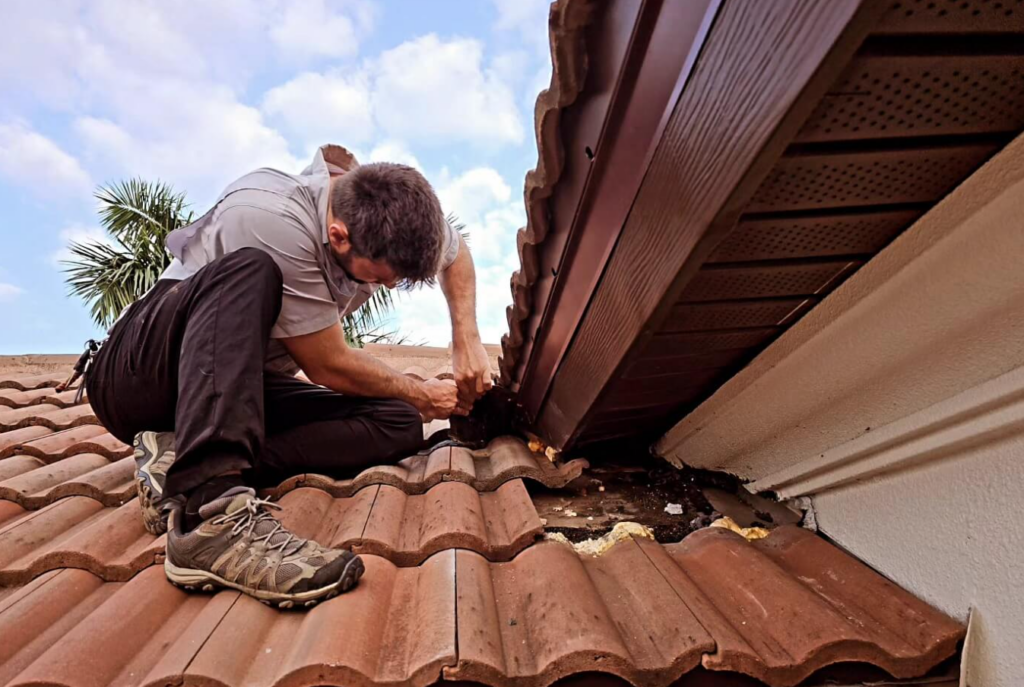
However, severe storm winds open gaps in homes, becoming Wildlife Entry Points Melbourne FL after storms.
Identifying compromised rooflines, eaves, and attic junctions early prevents displaced pests from threatening your home’s structural safety.
High-Risk Structural Breaches Created by Coastal Storm Winds
Central Florida homes feature architectural designs suited for subtropical heat, including extended roof overhangs and vented soffits.
Moreover, during severe wind events, these components face extreme uplift.
High-velocity gusts push upward against exterior stucco walls, causing panels to pop out.
Raccoons and opossums effortlessly pull these openings wider.
Native rodents require a gap no larger than a quarter to slip inside.
Unresolved soffit damage is exploited quickly by animals.
It becomes an established highway into overhead crawl spaces, bypassing ground-level pest barriers.
Along the upper roof deck, off-ridge vents, gooseneck exhaust ports, and lead plumbing flashings endure uplift forces.
Shingles peel away, valleys shift, and ridge caps loosen under wind vibration.
Moreover, displaced roof rats and Eastern gray squirrels navigate storm-tossed tree canopies. They readily target these openings to escape harsh weather.
When unaddressed, subtle roof gaps that wildlife and Florida pests discover quickly turn into permanent nesting sites. These problems cause contaminated insulation, ruined air ducts, and dangerous fire hazards from gnawed electrical wiring.
Local Melbourne Climate and Architecture: Why Brevard Homes Suffer More
Melbourne residences face climatic challenges inland properties rarely face.
Year-round maritime salt air accelerates corrosion of galvanized fasteners and screening.
Moreover, Spanish barrel tile roofs in Viera and Suntree can crack from falling branches.
This occurs long before storms arrive, causing eave assemblies to fail during moderate tropical gusts.
Fractured mortar or displaced valley flashing exposes the roof deck to Wildlife Entry Points Melbourne FL.
Overhanging live oaks enable displaced animals to leap onto compromised rooflines during storm events.
Post-Storm Structural Breach and Wildlife Threat Comparison
To help Brevard County homeowners prioritize repairs after severe weather, the following comparison table and bullet points break down the most vulnerable architectural features, the specific nuisance wildlife that target them, and the required professional exclusion solutions.
Key Post-Storm Vulnerability Checklist:
- Examine eave return points where soffit panels slide into wall J-channels for loose or sagging sections.
- Inspect ridge caps and off-ridge exhaust vents with binoculars for uplifted metal seams or torn mesh.
- Check barrel tile hip lines and roof valleys for cracked mortar, shifted tiles, or displaced bird stops.
- Verify that plumbing vent stack rubber boots have not split or pulled away from the roof deck.
- Look along fascia boards and drip edges for dark greasy rub marks left by climbing roof rats.
| Building Feature | Post-Storm Damage Pattern | Target Wildlife Species | Professional Exclusion Solution |
| Vinyl & Aluminum Soffits | Panels unseated from J-channels; bent perimeter fascia trims | Raccoons & Opossums | Heavy-gauge steel backing, channel re-anchoring, reinforced drip edges |
| Off-Ridge & Turbine Vents | Lifted vent cowls, torn insect screening, loosened flashing | Roof Rats & Gray Squirrels | Galvanized steel hardware cloth interior screening, riveted vent caps |
| Spanish Barrel Roof Tiles | Cracked mortar caps, shifted edge tiles, torn underlayment | Colonial Bats & Rodents | Custom metal bird stops, lead valley reinforcement, sealed hips |
| Plumbing Stacks & Boots | Rubber collar splits, torn lead boots, detached vent pipes | Rats, Tree Frogs & Lizards | Critter-proof metal collar retrofits, elastomeric flashing sealants |
| Gable Louvers & Siding | Blown-in louver slats, warped siding joints from wind flex | Bats & Nuisance Birds | Internal 1/4″ galvanized steel mesh, one-way exclusion funnels |
Preventing Long-Term Storm Damage Wildlife Attic Contamination
When animals infiltrate an attic, contamination spreads quickly.
Additionally, nesting wildlife deposit hazardous droppings, urine, and parasites into ceiling insulation.
Property owners facing storm damage from wildlife in attics often discover issues.
Compacted thermal barriers raise cooling costs during hot summer months.
Replacing damaged material with specialized TAP insulation in Melbourne FL restores energy efficiency while delivering an integrated, pest-deterrent barrier that prevents future colonization.
Homeowner Post-Storm Eave and Attic Inspection Protocol
Instead of climbing onto slick roofs after a storm, Melbourne homeowners should follow a safe ground-level inspection routine.
Additionally, begin by walking your foundation perimeter with a flashlight to check drip lines for fallen screws or dislodged screens.
Moreover, scan eave returns with binoculars to ensure soffits sit tightly inside wall channels.
Then carefully crack open the attic hatch to check for ammonia smells or disturbed insulation tracks.
Finally, listen for rustling or scratching sounds overhead during dawn and dusk hours.
Professional Exclusion: Securing Your Melbourne Home Against Breaches
Recovering from tropical weather on the Space Coast involves more than picking up yard debris. Additionally, neglecting a loose soffit or shifted tile allows displaced wildlife to convert your attic into an unsanitary harborage. If you notice structural shifts or hear scratching overhead, contact our certified technicians. Additionally, they will schedule a comprehensive roof and attic inspection. Moreover, our specialists install heavy-gauge steel exclusion barriers engineered to withstand coastal weather and keep your property permanently protected.
Frequently Asked Questions About Post-Storm Wildlife Invasions
What are the most common entry points wildlife exploit after a storm in Melbourne FL?
Common access points include popped vinyl soffits, lifted ridge vents, and detached plumbing stack boots. Wind uplift unseats panels, giving raccoons, squirrels, and roof rats immediate access.
How quickly do wild animals invade an attic following a Brevard County storm?
Displaced critters frequently invade attics within 12 to 24 hours after a storm clears. Flooded burrows force animals to search urgently for elevated, warm, and dry shelter.
Why should I avoid sealing soffit holes before an attic inspection?
Sealing exterior gaps without checking the attic traps animals inside wall cavities. Trapped pests chew through wires and drywall attempting escape, or die inside framing, generating severe odors.
Does homeowners insurance cover wildlife exclusion after storm damage?
Standard policies cover direct structural storm damage, but often exclude rodent remediation. Obtaining an inspection report confirming that wildlife entered through storm breaches is crucial for claims.