
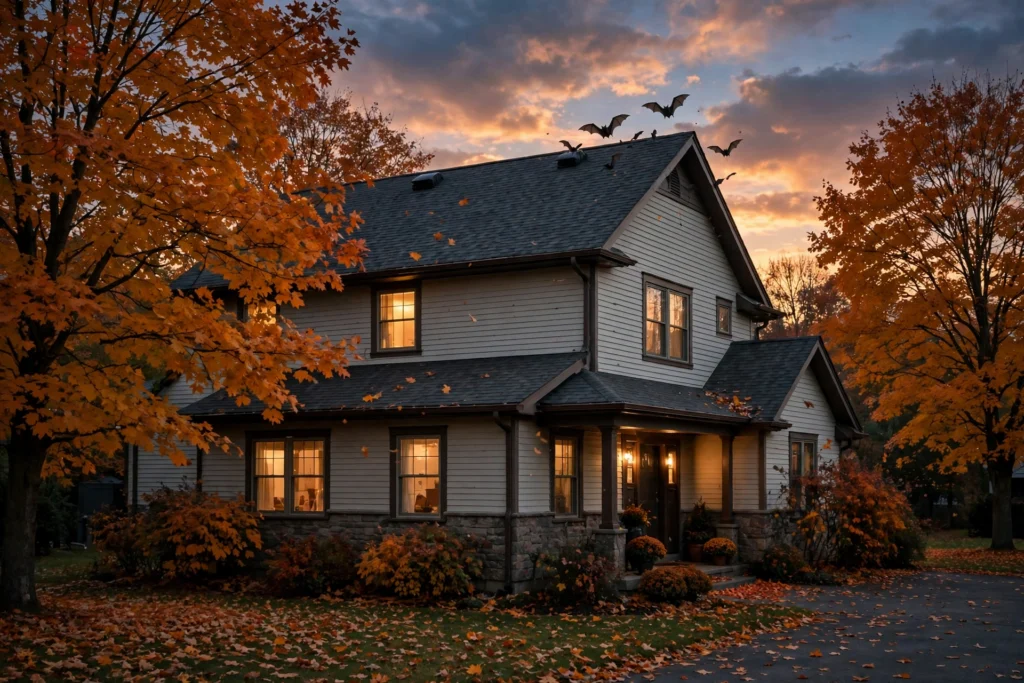
Is fall the best time for bat exclusion in Melbourne, FL?
The Fall Bat Exclusion Melbourne FL falls within the legal window: August 15 through April 15. Additionally, exclusion devices must allow bats to leave without returning and stay in place for at least four nights. They should be used when overnight temperatures are forecast at 50°F or warmer. Assess entry points and roosts before sealing. Do this in accordance with FWC’s seasonal guidance.
For Melbourne homeowners, fall is also a practical time to inspect roof edges, soffits, vents, and other openings before cooler months and after the summer storm season. Florida Wildlife Management provides bat removal and exclusion services in the area.
Key takeaways for Melbourne homeowners
- Plan exclusion between August 15 and April 15. Florida’s maternity-season restrictions apply statewide, including Melbourne and Brevard County. FWC guidance
- Don’t block suspected roosts during maternity season. Young bats may be unable to fly out, and blocking the exit can trap them inside. FWC seasonal guidance
- A proper exclusion is more than plugging a hole. A professional identifies entry and exit points, uses one-way devices, allows the required exit period, then seals access points after bats are out.
- Melbourne’s wet season makes roofline checks worthwhile. NOAA/NWS 1991–2020 normals for Melbourne show higher average rainfall in summer and early fall, including 8.55 inches in September; this is a reason to inspect for storm-related openings, not proof that weather caused a particular bat entry. (NWS Melbourne climate normals)
- Never handle a bat. If a person or pet may have had contact with one, contact a medical professional, local health department, or veterinarian promptly.
Why fall is the right time for bat exclusion in Melbourne, Florida
Florida’s bat maternity season runs from April 16 through August 14. However, the state guidance identifies fall as the preferred time to exclude bats from a building. This is because the maternity season has ended and flightless young are not left behind. This aligns with Fall Bat Exclusion Melbourne FL. The ordinary exclusion window runs August 15 through April 15. Permits are required for exclusion outside that window. Always confirm current requirements with FWC before work begins.
What Melbourne’s climate and housing mean for an inspection
Melbourne has a warm, humid climate.
In the 1991–2020 normals, summer and early-fall rainfall are higher than winter.
NOAA/National Weather Service data show 7.52 inches of normal June rainfall, 7.49 inches in August, and 8.55 inches in September.
Additionally, this informs Fall Bat Exclusion Melbourne FL planning.
For a Melbourne-area home, the practical step is to check the building envelope for actual openings rather than assume a particular roof or neighborhood has a bat problem. An inspection can include roof returns, soffit edges, fascia, attic vents, gable vents, screened openings, and places where utility lines or roof features meet the wall. Storm-damaged or deteriorated materials should be repaired appropriately; sealing should follow, not precede, confirmation that bats have exited.
Local comparison: what to check on different Melbourne properties
| Property setting | What to inspect | Why it matters for bat exclusion |
|---|---|---|
| Inland Melbourne home | Soffits, fascia, roof vents, attic access points, and gaps around rooflines | These are common building-envelope locations to assess when checking for wildlife access. |
| Coastal or barrier-island property | Screens, vents, roof edges, and any visible storm or corrosion damage | Exposure and past repairs can vary by property; inspect the actual condition rather than assume a uniform coastal issue. |
| Older or recently repaired roofline | Loose trim, open joints, gaps around flashing, and patchwork repairs | Small openings can be missed if only the attic interior is checked. A full exterior and interior assessment helps locate the route. |
This is a field checklist, not a claim that every home in a particular area has these vulnerabilities. Florida Wildlife Management also serves nearby communities in Brevard County and offers wildlife exclusion services.
Why the timing rules matter
Florida’s exclusion window and maternity-season restriction
FWC says exclusion devices can be used August 15 through April 15, outside maternity season. During maternity season, blocking bats from returning to a roost can leave flightless pups inside. Florida prohibits harming or killing bats, and poisons or pesticides must not be used to harm, kill, or deter them.
Temperature and minimum device period
FWC requires exclusion devices to remain in place for at least four nights and says the process should take place when overnight temperatures are forecast to be at least 50°F. Local forecasts and current FWC requirements should be checked for the actual work dates.
What that means when scheduling in Melbourne
Fall is a good time to arrange an inspection and make a plan.
However, the calendar alone does not make a particular night suitable.
Additionally, the work must fit the state’s temperature and exclusion requirements.
A qualified wildlife professional can assess the colony, confirm the exits, and schedule the one-way devices for appropriate conditions.
What Melbourne homeowners should do now
1. Note the signs without disturbing the roost
Look for bats leaving at dusk, dark droppings beneath a roofline opening, or staining around a suspected access point. These signs can suggest activity, but they do not confirm the species, size of a colony, or every entry point. Avoid climbing into an attic or reaching into a gap to investigate.
2. Record where and when you see activity
From a safe distance, note the location, approximate time, and whether bats appear to enter or leave one or more points. Photos of exterior staining or damaged trim can help during an inspection. Do not shine lights into a roost, use smoke, or try to flush animals out.
3. Arrange an inspection before sealing gaps
Bats may use more than one opening. Sealing an active exit before the animals are excluded can trap them inside. Ask the provider to identify likely entry and exit points, explain the exclusion plan, and describe how permanent repairs will be completed after the animals leave. Florida Wildlife Management’s bat service page outlines its bat removal and exclusion offering.
4. Repair and protect the roofline after exclusion
Once the bats are confirmed out, close the access points with durable materials appropriate to the building and maintain functional vents and screens. For homes with storm damage, coordinate wildlife exclusion with the needed roof or soffit repair rather than covering an opening before the bat assessment. Brevard County’s hurricane season runs June 1 through November 30, and its storm-preparation information encourages property preparation ahead of storms.
5. Ask about droppings and attic cleanup
If guano or contaminated insulation is present, ask how cleanup will be assessed and handled. Avoid sweeping or stirring droppings yourself. The amount and condition of material varies, so a site assessment is needed before anyone can recommend a cleanup scope. See Florida Wildlife Management’s wildlife services for its exclusion and related service information.
Professional bat exclusion vs. blocking an opening yourself
| Approach | What it involves | Main concern | Best use |
|---|---|---|---|
| One-way professional exclusion | Inspection, properly placed one-way devices, monitoring for the required period, then sealing access points | Must follow seasonal, temperature, and device-duration rules | An active roost in a building, handled under current FWC requirements |
| Immediate DIY sealing | Plugging a suspected opening before confirming the bats are out | Can trap bats, including young, inside; may not close all access points | Not recommended for an active or suspected roost |
| Waiting without assessment | Taking no action while signs continue | Activity or building contamination may continue, and seasonal timing can change | Only as a short pause while arranging qualified advice, not a substitute for an assessment |
FWC describes exclusion devices as the appropriate method for removing roosting bats from buildings and sets limits for when and how they can be used under state wildlife rules. Do not use poison, pesticide, or a method that kills or harms bats.
Schedule a Melbourne bat inspection before the next maternity season
If you have seen bats entering a Melbourne roofline or found signs of a roost, arrange an assessment before sealing or repairing the suspected opening. Fall is a useful time to plan because it follows Florida’s maternity season, but a lawful exclusion still depends on the current date, forecast temperature, and a correctly installed one-way system. Review Florida Wildlife Management’s bat exclusion services or contact the local team to discuss next steps.
Frequently asked questions about bat exclusion in Melbourne, FL
When is bat exclusion season in Melbourne, Florida?
The standard Florida window is August 15 through April 15. The maternity season is April 16 through August 14; a permit is required for exclusion during that protected period. For details, review FWC bat guidance or explore Florida Wildlife Management’s bat exclusion information.
Is fall the best time to remove bats from an attic in Melbourne?
Fall is within Florida’s usual exclusion window, and FWC identifies it as the preferred season after maternity season ends. Work still has to meet temperature, minimum-duration, and other applicable requirements outlined in state building guidance. You can also request an assessment directly through Florida Wildlife Management.
Can I seal a bat hole in my roof right away?
Not if bats may still be using it. First establish whether the opening is active and whether bats are inside. Following FWC’s exclusion guidance, a one-way exclusion should allow bats to leave before permanent sealing. Homeowners can also consider professional bat removal options.
Is it legal to remove bats during Florida’s maternity season?
Exclusion devices generally cannot be installed April 16 through August 14 without a permit. The restriction protects young bats that may be unable to fly. Ask FWC about current rules and any permit process noted in their seasonal notice, or reach out via Florida Wildlife Management’s contact page.
How long does a bat exclusion device need to stay in place?
Per FWC’s bat-in-buildings instructions, exclusion devices must remain in place for at least four nights. A professional should also assess the openings and confirm the applicable weather conditions before permanent sealing. Learn more on Florida Wildlife Management’s bat service page.
What overnight temperature is required for bat exclusion in Florida?
FWC requires that exclusion be conducted when overnight temperatures are forecast to be at least 50°F. Check a current local forecast and FWC’s full guidance before scheduling. Florida Wildlife Management can also be reached through its contact page.
How can I tell if bats are living in my Melbourne attic?
Possible clues include seeing bats enter or leave at dusk, dark droppings under an opening, or staining near a gap. These clues are not a definitive identification. Do not touch bats or enter an unsafe attic; review FWC’s signs and guidance and request an inspection through Florida Wildlife Management.
Where do bats get into Melbourne homes?
A home inspection may check roof edges, soffits, fascia, vents, and gaps around building features. The entry point depends on the property, so it should be located before repairs. Learn about wildlife exclusion services or consult FWC’s building advice.
Can bats enter through a very small opening?
Yes. According to CDC bat-proofing advice, bats can fit through openings as small as about ¼ inch. Avoid trying to plug a suspected active roost; have it assessed and sealed after proper exclusion using professional bat services.