
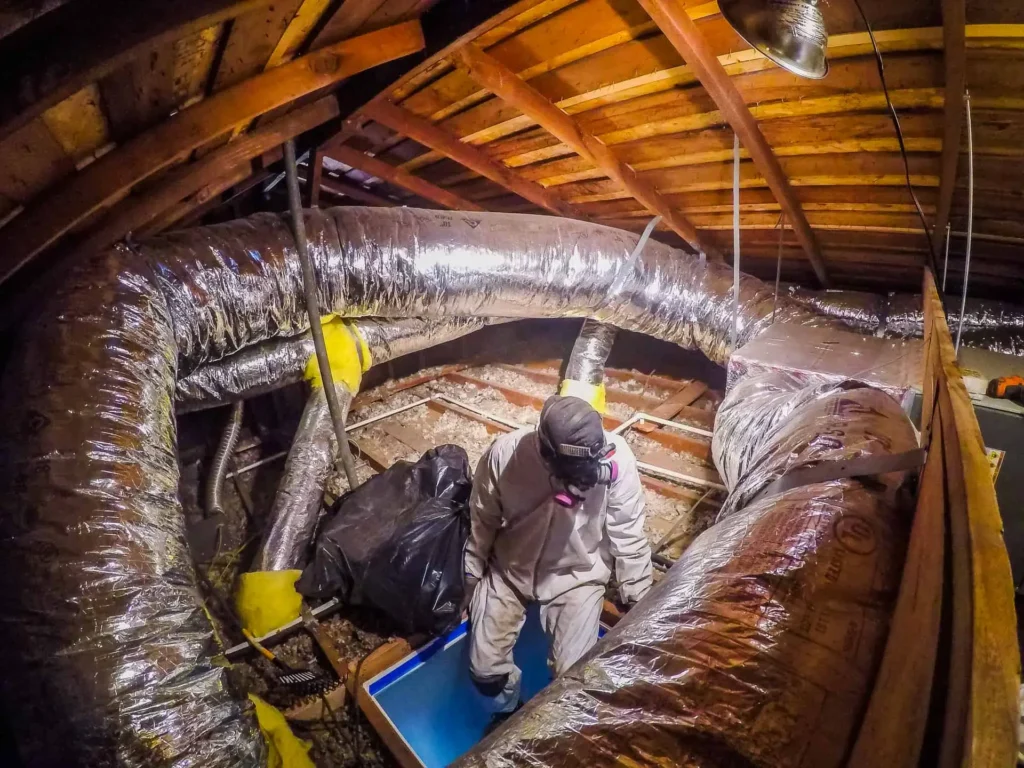
Attic contamination is more than an unpleasant odor or a few droppings hidden above the ceiling, because once rats, raccoons, squirrels, bats, birds, or other wildlife spend time inside an attic, urine, feces, nesting materials, damaged insulation, moisture, and organic debris can gradually affect the cleanliness of the space and create potential health concerns.
For homeowners in Melbourne, Florida, attic problems deserve particular attention because local homes exist in a warm coastal environment where wildlife remains active for much of the year, while humid summers and frequent rainfall can add moisture-related pressure to roofs, vents, soffits, insulation, and other vulnerable building components. The National Weather Service describes summers in the Melbourne region as hot and humid, with frequent showers and thunderstorms, particularly during the wetter June-through-September period.
At Florida Wildlife and Pest Management, our approach focuses on identifying what caused the contamination, resolving the wildlife problem, protecting vulnerable entry points, and determining what attic sanitation, insulation work, or restoration may be appropriate for the property.
What Is Attic Contamination?
Attic contamination occurs when animal waste, nesting debris, damaged insulation, moisture, dead pests, or other unwanted materials compromise the condition of an attic.
Wildlife contamination frequently develops gradually, which means a homeowner may hear scratching for several nights without realizing that an animal has already created a nesting area or repeatedly contaminated the insulation underneath it.
Common sources of attic contamination include:
- Rat urine and droppings (NO MOUSE)
- Raccoon feces and nesting materials
- Bat guano
- Squirrel nests and waste
- Bird droppings and feathers
- Dead rodents or other wildlife
- Damaged or compressed attic insulation
- Moisture intrusion and damp building materials
- Lingering odors and scent markings, including pheromones, left behind by wildlife
CDC Recommendation: The CDC recommends taking precautions when cleaning areas contaminated by rodents and specifically advises wetting urine and droppings with disinfectant before removal rather than immediately sweeping or vacuuming dry material. Homeowners who are unsure about the extent of contamination may also choose to have the attic professionally evaluated before attempting cleanup.
Why Attic Contamination Is a Local Concern in Melbourne, Florida
Florida is known for its warm climate, coastal ecosystems, abundant vegetation, and diverse wildlife, while Melbourne combines established residential neighborhoods with trees, waterways, suburban development, and proximity to Florida’s Atlantic coast. These conditions can bring homeowners, businesses, and wildlife into frequent contact, particularly when animals locate damaged soffits, roof gaps, vents, fascia openings, or other sheltered entry points.
Melbourne is also located within Brevard County, one of the primary areas served by Florida Wildlife and Pest Management. Our team helps homeowners and commercial businesses address these property-specific problems through wildlife inspection, exclusion, removal, attic restoration, and prevention services designed around Florida properties.
Melbourne’s Heat, Humidity, and Attic Conditions
Attics already experience considerable temperature variation, but Florida’s warm, humid environment makes moisture management particularly important.
The U.S. Environmental Protection Agency explains that moisture control is fundamental to controlling mold and recommends keeping indoor relative humidity below 60% when possible.
Animal activity can make an attic problem more complicated because wildlife may disturb insulation, chew or damage ductwork, create openings around the roofline, or leave organic material in areas that homeowners rarely inspect.
For Melbourne homeowners, attic restoration should therefore address the source of contamination, rather than simply covering an odor or adding fresh insulation over contaminated areas.
Signs Your Melbourne Home May Need Attic Contamination Cleanup
Wildlife does not always remain visible long enough for homeowners to identify the animal, which makes secondary signs especially important.
1. Strong or Unusual Attic Odors
Persistent ammonia-like, musty, or animal-related odors may indicate urine, droppings, nesting materials, a dead animal, or another contamination source. Odors that disappear temporarily after ventilation but repeatedly return deserve further investigation.
2. Droppings in the Attic
Rodent, raccoon, squirrel, bird, and bat droppings vary considerably in appearance, but any unexplained accumulation of animal waste inside an attic should be treated cautiously.
The CDC notes that rodent droppings can appear in areas rodents have accessed and that new droppings appearing after cleanup can indicate continued rodent activity.
3. Scratching or Movement Above the Ceiling
Nighttime scratching may indicate rats, bats, or raccoons, while activity during daylight hours may be associated with squirrels or birds, although behavior varies and sound alone should not be used as a definitive species identification.
A professional wildlife inspection can evaluate the roofline, soffits, vents, plumbing penetrations, attic insulation, damage, and possible wildlife entry points. Florida Wildlife Management describes this inspection process as determining the animal involved, how it entered, and what damage occurred before recommending removal, exclusion, sanitation, insulation repair, or restoration.
4. Damaged or Flattened Attic Insulation
Animals traveling repeatedly through insulation can compress, displace, tear, or contaminate it. Where contamination is significant, simply blowing additional insulation over damaged material may fail to address the underlying problem.
Homeowners considering insulation improvements can learn more about the company’s attic insulation services in Florida.
Rodent Attic Contamination and Safe Cleanup
Rodents are one of the most common reasons homeowners search for terms such as attic contamination cleanup, rodent attic cleanup, attic sanitation, and attic decontamination near me.
A contaminated rodent area should not automatically be treated like ordinary household dust.
The CDC recommends wearing protective gloves and thoroughly wetting rodent urine and droppings with an appropriate disinfectant before wiping the material away; dry sweeping or vacuuming before disinfection should be avoided because disturbing contaminated material can put particles into the air.
Where an infestation involves extensive insulation contamination, inaccessible areas, multiple animals, or substantial accumulations of waste, professional evaluation is generally more practical than attempting a large attic cleanup without understanding the extent of the problem.
Bat Guano and Attic Contamination
Bat contamination requires a different approach from ordinary rodent cleanup.
Bird and bat droppings can sometimes create health concerns. The CDC notes that a fungus associated with histoplasmosis can grow in contaminated material, and disturbing that material may release fungal spores into the air.
The CDC’s occupational guidance therefore emphasizes preventing accumulations of bird or bat droppings and managing exposure when contaminated material must be disturbed.
If bats are suspected inside a Brevard attic, homeowners should avoid immediately disturbing accumulated guano and instead arrange an appropriate wildlife inspection and exclusion plan.
Attic Cleanup vs. Attic Decontamination vs. Attic Restoration
These search terms are often used interchangeably, although the actual scope of work can differ:
| Service | Main Purpose | When It May Be Needed |
|---|---|---|
| Attic cleanup | Remove visible waste, debris, nests, and unwanted material | Minor or localized contamination |
| Attic sanitation | Treat affected attic surfaces after appropriate waste removal | Animal urine, droppings, odors, or nesting |
| Attic decontamination | Address more extensive wildlife-contaminated areas | Significant rodent, raccoon, bird, or bat activity |
| Attic insulation removal | Remove insulation that has been extensively damaged or contaminated | Widespread waste or damaged thermal material |
| Attic restoration | Restore the attic after wildlife removal and contamination work | More substantial infestation or damage |
| Wildlife exclusion | Seal vulnerable entry points | Preventing animals from returning |
The appropriate solution depends on the species involved, how long the infestation has existed, the amount of contamination, the condition of insulation, and whether wildlife can still enter the structure. A professional inspection helps determine which services are actually necessary for the property.
Florida Wildlife & Pest Management also provides warranty coverage on qualifying wildlife exclusion and repair services, giving homeowners and commercial property owners added confidence in the work performed.
Attic Contamination Risks Across Brevard and Indian River Counties
Florida Wildlife and Pest Management states that it serves Brevard and Indian River Counties, with location pages covering communities such as Melbourne-area neighborhoods, Palm Bay, Cocoa, Rockledge, Satellite Beach, and Vero Beach.
| Area | Local Property Considerations | Attic Concerns |
|---|---|---|
| Melbourne / Brevard County | Warm humid climate, mature neighborhoods, trees, coastal weather | Rats, squirrels, raccoons, bats, damaged vents and insulation |
| Palm Bay | Large residential areas mixed with vegetation | Rodent and wildlife entry around roof and soffit gaps |
| Rockledge | Established suburban neighborhoods with local wildlife activity | Squirrels, raccoons, rats, bats, and attic damage |
| Satellite Beach, Indialantic, & Melbourne Beach | Coastal exposure and humid conditions | Roofline vulnerabilities, wildlife entry, moisture concerns |
| Vero Beach / Indian River County | Warm coastal climate and residential vegetation | Wildlife nesting, roof entry, droppings, and insulation contamination |
This location-specific approach matters because attic problems are rarely identical from one property to another, even when homes are located only a few miles apart.
How to Prevent Attic Contamination After Wildlife Removal
Removing contaminated material without addressing wildlife entry points can leave the home vulnerable to another infestation.
The CDC recommends sealing openings that rodents can use to enter a building and identifies attics as one of the areas that should be checked for gaps and holes. Larger openings may require durable materials such as hardware cloth, metal, cement, or metal sheeting rather than temporary cosmetic repairs.
Homeowners should therefore consider:
- Inspecting roof, soffit, fascia, and vent damage.
- Sealing identified wildlife entry points.
- Repairing damaged screens and vent covers.
- Monitoring the attic for new droppings.
- Correcting roof or moisture problems.
- Replacing insulation when contamination or damage justifies it.
- Scheduling follow-up inspections when wildlife activity continues.
For additional prevention information, visit the Florida Wildlife Management Homeowner Resource Center, which covers attic problems, wildlife inspections, prevention, exclusion, sanitation, and restoration topics.
Protect Your Melbourne Home From Future Attic Contamination
Attic contamination should be treated as both a cleanup problem and a prevention problem, because removing droppings or damaged insulation without determining how wildlife entered the home can allow the same issue to return.
For homeowners in Melbourne and surrounding Brevard and Indian River County communities, Florida’s humid coastal environment, active wildlife, and varied residential construction make a thorough inspection especially valuable when unusual attic noises, odors, droppings, or insulation damage appear.
Florida Wildlife and Pest Management provides wildlife inspection, removal, exclusion, attic restoration, insulation, and prevention services designed around Florida properties, with the goal of removing the immediate problem while reducing the conditions that allow wildlife to return.
Contact Florida Wildlife and Pest Management to schedule an inspection if you suspect wildlife activity or attic contamination in your Melbourne, FL home.
FAQs About Attic Contamination Cleanup in Melbourne, FL
What is attic contamination?
Attic contamination occurs when wildlife droppings, urine, nesting materials, dead animals, damaged insulation, moisture, or other debris compromises the condition of an attic.
How do I know if my attic is contaminated?
Common signs include animal droppings, strong odors, urine staining, damaged insulation, nesting materials, scratching sounds, dead animals, or continued wildlife activity around the roof.
Note: Droppings can sometimes be misidentified—lizard droppings, for example, are frequently mistaken for rodent droppings. Properly identifying the animal responsible is an important part of determining the appropriate removal, treatment, and prevention plan.
How much does attic contamination cleanup cost in Melbourne, FL?
The cost of attic contamination cleanup in Melbourne, FL depends on attic size, the animal involved, the amount of waste, accessibility, insulation condition, exclusion repairs, and whether insulation replacement or more extensive restoration is required, so an inspection is generally needed for an accurate estimate.
Can rodent droppings be vacuumed from an attic?
The CDC advises against vacuuming or sweeping dry rodent urine or droppings before they have been properly disinfected because doing so can disturb contaminated particles.
Does contaminated attic insulation need to be replaced?
Not every wildlife problem requires complete insulation replacement. Depending on the location and extent of contamination or damage, partial insulation removal, spot treatment, or localized replacement may be appropriate.
When insulation is extensively soiled, damaged, compressed, or contaminated, more extensive removal and replacement may be recommended after the wildlife problem has been resolved.
Florida Wildlife & Pest Management documents attic conditions with video whenever possible, helping homeowners see the evidence of wildlife activity, the areas affected, and the condition of their insulation before recommendations are made.
What is the difference between attic cleanup and attic restoration?
Attic cleanup primarily removes contaminated material, while attic restoration may include cleanup, sanitation, damaged insulation removal, new insulation, repairs, and wildlife exclusion depending on property conditions.
Who provides rodent attic cleanup in Melbourne, FL?
Florida Wildlife and Pest Management provides wildlife removal, exclusion, attic-related services, inspections, and prevention solutions from its Melbourne location while serving Brevard and Indian River Counties.
How can I prevent animals from contaminating my attic again?
Long-term prevention generally requires identifying how animals entered and sealing vulnerable roofline, soffit, vent, plumbing, fascia, and structural openings after the animals have been removed.