
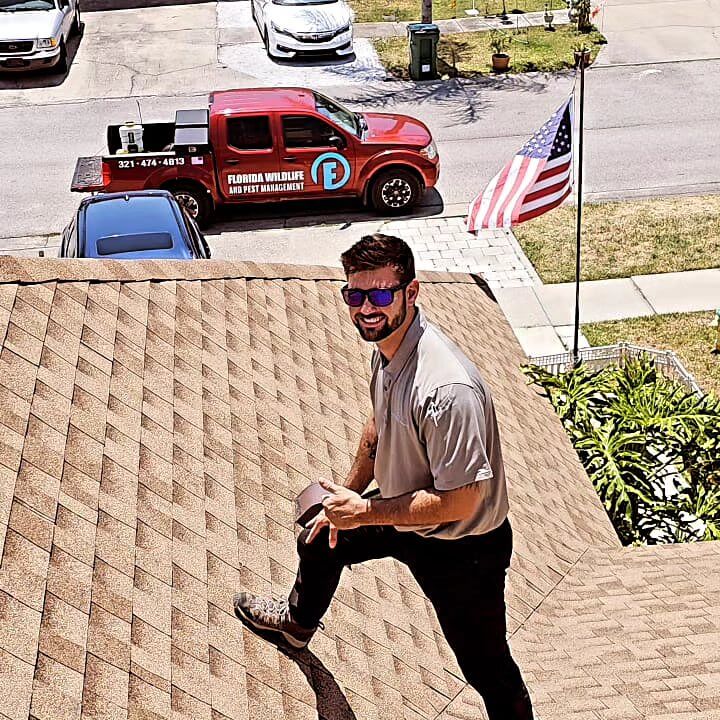
Routine maintenance and periodic inspections can help reduce the risk of wildlife entering your home. In Florida, aging materials, growing vegetation, storms, and normal changes to the roofline can create new entry points over time—even in homes that have never had a wildlife problem.
Use this checklist to identify potential vulnerabilities early and address them before wildlife finds them.
Exterior & Roofline
At least twice a year—and after significant storms—walk around your property and look for changes or damage that could create new wildlife entry points.
- Look for damaged, loose, or missing soffit.
- Check fascia for deterioration, damage, or openings.
- Look for gaps around roof returns and other roofline transitions.
- Check roof vents and other exterior vents for damage.
- Look for missing or damaged shingles and loose, cracked, broken, or missing roof tiles.
- Check screens for holes or deterioration.
- Check around pipes, utility lines, and other areas where they enter the home for gaps or openings.
- Check garage doors for gaps or damaged weather seals.
- Look for damage or openings around gutters and the roofline.
- Pay attention to anything that looks different from your last inspection, particularly after storms or severe weather.
Tile roofs, particularly barrel-style tile roofs, should be checked regularly for cracked, broken, loose, or missing tiles and other changes that may create or expose areas wildlife can use.
There is no need to climb onto your roof. Many potential problems can be spotted safely from the ground. Areas that cannot be safely seen or evaluated should be inspected by a qualified professional.
Trees, Vegetation & Access Routes
Wildlife may use trees, vegetation, fences, and other structures to reach your roof before finding a vulnerable entry point.
- Trim tree branches away from the roof when practical.
- Keep vines and dense vegetation from growing directly against the home.
- Be aware of fences, utility lines, gutters, and nearby structures that may provide access to the roofline.
- Keep vegetation around the home trimmed and maintained.
- Be aware that fruit trees, vegetable gardens, and other edible plants may provide food for rodents and other wildlife. Pick ripe or fallen produce when practical.
Not every access route can be eliminated, so keeping soffits, fascia, vents, and other vulnerable areas in good condition is one of the best ways to help prevent wildlife from getting inside.
Food & Water Sources
Wildlife is more likely to spend time around a home or business when food, water, and shelter are easy to find.
- Keep garbage containers securely closed.
- Avoid leaving pet food outdoors overnight.
- Clean up spilled birdseed beneath feeders.
- Store pet food, birdseed, and other animal feed in secure containers.
- Pick up fallen fruit when practical.
- Remove standing water when possible and address leaks or other unnecessary water sources around the property.
Bird feeders do not necessarily cause wildlife problems, but seed that falls to the ground can attract rodents and other wildlife.
Garage & Storage Areas
Garages and storage areas are frequently overlooked when it comes to wildlife prevention.
- Check the bottom and sides of garage and storage doors for gaps.
- Avoid leaving pet food, birdseed, or other food in open bags.
- Store food and animal feed in sealed containers.
- Reduce unnecessary clutter where rodents could hide or nest.
- Watch for droppings, gnaw marks, nesting materials, or unusual odors.
Inside the Attic
You don’t need to routinely crawl through your attic or enter areas that are difficult to access safely. If you do access your attic, pay attention when retrieving decorations, changing filters, or using the space for storage.
Watch for:
- New droppings
- Disturbed or compressed insulation
- Tracks, pathways, holes, or tunnel-like areas through the insulation
- Nesting materials
- Unusual odors
- Chewed wires, ductwork, or other materials
- Urine or other staining
- Scratching, scurrying, chewing, or other movement sounds
If something looks or sounds different from the last time the attic was checked, it may be worth having it evaluated. Identifying the animal involved is important before deciding what action is needed.
After Storms & Hurricanes
Florida weather can quickly create new openings or damage around a structure. After significant wind or storm activity, look for:
- Loose, damaged, or missing soffit
- Damaged screens or vents
- Missing or damaged shingles
- Loose, cracked, broken, or missing roof tiles, including barrel tiles
- Fallen or damaged tree branches near the roof
- Damage around the roofline
- New gaps or openings
A property that was secure before a storm may have new wildlife entry points afterward. Checking the exterior after severe weather can help identify these changes before wildlife finds them.
When to Schedule a Professional Inspection
Consider a professional wildlife inspection if you:
- Hear scratching, running, chirping, or other unexplained noises.
- Find droppings in the attic, garage, or other areas of the property.
- Notice unusual odors.
- See disturbed insulation or nesting materials.
- Discover damage or a new opening along the roofline.
- See wildlife repeatedly entering or leaving the same area of the building.
- Have had wildlife problems in the past and notice signs of new activity.
- Are unsure what type of animal may be causing the problem.
A professional inspection can help identify the species involved, locate active and potential entry points, and evaluate any damage or contamination. Florida Wildlife & Pest Management documents attic conditions with video whenever possible so property owners can see what was found and better understand recommended repairs, removal, or restoration services.
James’s Pro Tip
“Don’t wait until you hear something in the attic to look at your home. Rooflines change, materials deteriorate, trees grow, and storms cause damage. Catching a small opening before an animal finds it is almost always easier than dealing with the problem after wildlife moves in.”
Aaron’s Repair Tip
“Pay attention to small changes around your roofline. A loose soffit, damaged fascia, or opening that doesn’t look like much from the ground may be enough for wildlife to take advantage of. Repairing those areas early can help prevent a much bigger problem later.”
Related Articles
- What Happens During a Professional Wildlife Inspection?
- Wildlife Removal vs. Exclusion: What’s the Difference?
- 10 Warning Signs You May Have Roof Rats
- Why Animals Enter Your Attic