
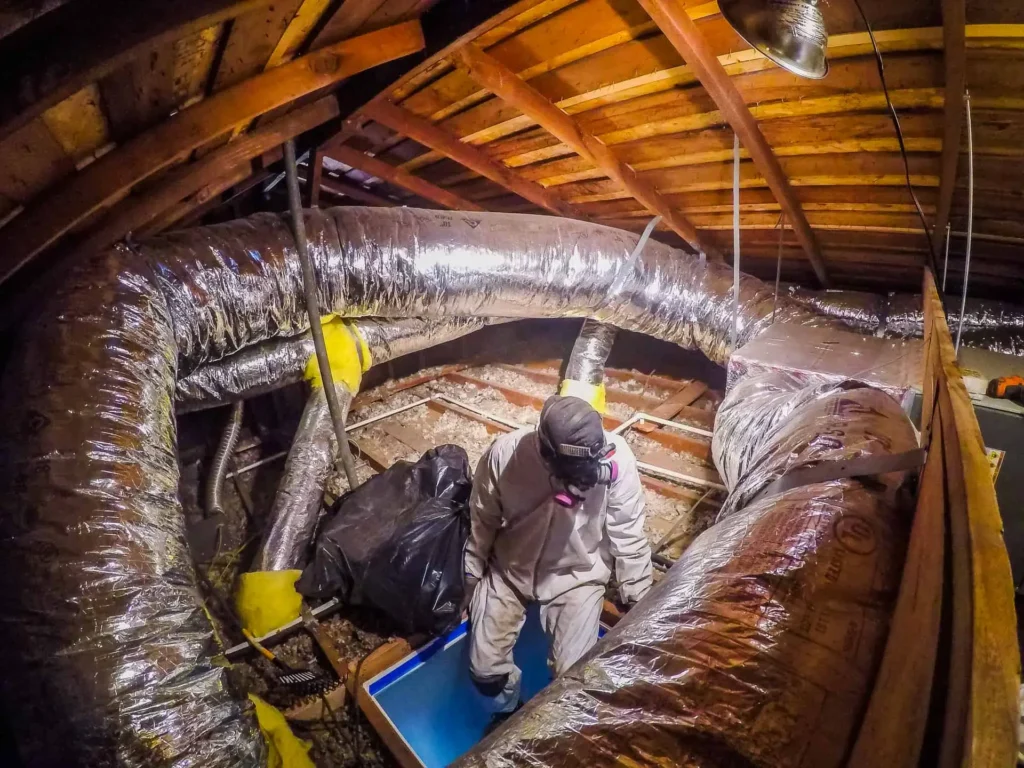
A complete wildlife removal plan should begin with a thorough interior and exterior inspection to identify the species, determine how the animals are entering the home, and evaluate any damage or contamination. Depending on the situation, the next steps may include humane or non-invasive removal, confirming that dependent young are not trapped inside, permanently repairing entry points, sanitizing affected areas, and restoring damaged materials such as insulation, soffit, and fascia.
The order of these steps matters. Sealing a home too early can trap wildlife inside, which is why a thorough inspection should be completed before entry points are closed. On the other hand, removing or trapping an animal without completing the necessary exclusion repairs can leave the home vulnerable to another animal entering through the same opening.
Bat Removal Requires Additional Care
Bat removal requires additional care because of Florida’s bat maternity season. The Florida Fish and Wildlife Conservation Commission (FWC) states that bat maternity season runs from April 16 through August 14. During this period, bats generally cannot be excluded from a building without a permit because flightless pups may be left behind when adult bats are prevented from returning to the roost. Bat exclusion devices may be used without a permit from August 15 through April 15, following FWC requirements.
The right solution depends on the species involved, the construction of the home, the condition of the attic, and the surrounding property. A comprehensive inspection allows Florida Wildlife & Pest Management to recommend the work the home actually needs rather than applying the same solution to every wildlife problem.
Florida Bat Exclusion Guidelines:
Florida Fish and Wildlife Conservation Commission — Bats in Buildings
Stop Animals From Returning to Your Florida Attic
Understanding how wildlife enters a home helps explain why removal alone is rarely enough. In many cases, the underlying problem includes an accessible opening along the roofline combined with exterior conditions that make the property attractive or easy for wildlife to access.
However, not every entry route is obvious. Rodents may sometimes gain access through plumbing-related pathways, including deteriorated cast-iron plumbing, uncapped or damaged pipes, or loose fittings that create a route into the home. A thorough inspection should consider both exterior entry points and less obvious pathways when the source of rodent activity isn’t immediately clear.
How Melbourne Homeowners Can Reduce Repeat Wildlife Problems
Melbourne homeowners can help reduce repeat wildlife problems by trimming branches and other access routes away from the roof, securing pet food and garbage, repairing storm- or weather-related damage, protecting vulnerable vents and openings, and addressing maintenance issues that could provide wildlife with access to the home.
If you hear scratching, find droppings, notice unusual odors, or discover disturbed attic insulation, a professional inspection can help determine what is actually happening.
Florida Wildlife & Pest Management can identify the species, locate potential entry routes, remove wildlife responsibly, complete appropriate exclusion repairs, and recommend attic restoration when needed.
FAQs About Why Animals Get in Attic Spaces
Why do animals get in the attic?
Animals enter attics for dry shelter, predator protection, nesting space, and warmth or temperature stability, especially when damaged soffits, vents, roof gaps, chimneys, or branches make the attic accessible.
What animal is in my attic if I hear scratching at night?
Light nighttime scratching or gnawing often suggests rats, not mice. Heavier movement may indicate a raccoon, while fluttering around dusk or dawn may point to bats, although an inspection is needed for confirmation.
What animal runs in the attic during the day?
Squirrels are common daytime attic animals and may create fast running, chewing, or rolling sounds. Birds may produce chirping, scratching, or fluttering around vents and eaves. Raccoons can also be active during the day, particularly when a mother is caring for young or when an animal has been disturbed. The time of day can provide clues, but it isn’t enough by itself to identify the animal. A professional inspection can confirm the species based on sounds, droppings, entry points, nesting activity, and other evidence.
How do animals get into an attic?
Animals can enter attics through soffit gaps, damaged fascia, roof returns, vents, chimneys, broken screens, garage doors, lifted roofing, utility openings, and gutter systems. They may reach the roof using trees, fences, vines, utility lines, and gutter systems before locating a vulnerable opening that provides access to the home.
How are animals removed from an attic?
Professional wildlife removal begins by identifying the animal and locating all active and potential entry points. The appropriate removal method is then selected based on the species and situation, which may include traps, cages, or one-way exclusion devices. Entry locations are properly sealed as part of the exclusion process to help prevent future wildlife activity.
Will animals leave the attic on their own?
They may leave temporarily to feed, but they often return because the attic remains a secure den or nest, so exclusion and repairs are needed for a lasting result.
Can attic animals damage electrical wires?
Yes. Roof rats and squirrels may chew electrical wiring, which can damage circuits and create a potential fire hazard. As rodents, rats and squirrels have front teeth that grow continuously throughout their lives, so gnawing is a normal behavior that helps wear down their teeth. Unfortunately, wiring, wood, plastic, and other materials inside an attic can become targets for that chewing.
Who provides wildlife removal in Melbourne, FL?
Florida Wildlife & Pest Management provides professional wildlife inspections, humane wildlife removal, exclusion and entry-point repairs, attic sanitation and restoration, and pest management services for homeowners in Melbourne and surrounding communities in Brevard and Indian River counties. We also provide attic insulation removal, replacement, and installation, including adding insulation to attics with low or insufficient insulation levels—even when no wildlife damage is present.